
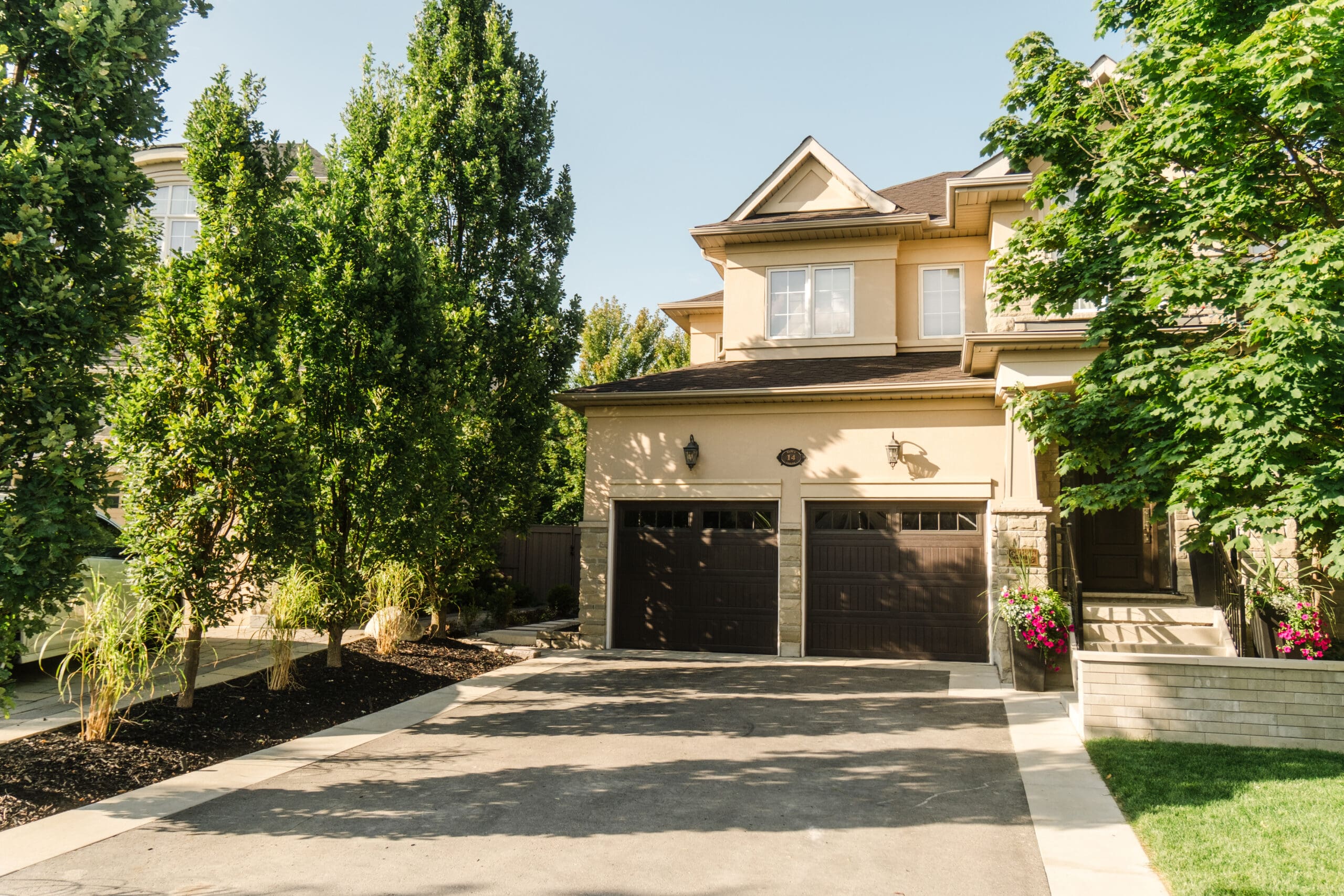
Interlock is one of the best surfaces for Ontario driveways, walkways and patios — when it’s built right. But plenty of Newmarket homeowners have a driveway with a dip where the car parks, a walkway that rocks underfoot, or a patio with weeds pushing through every joint.
The good news: interlock is made of individual pavers, so problems can often be fixed without tearing everything out. Here’s how to tell what’s going on.
Why does interlock sink?
Almost every sinking problem comes from below the pavers, not the pavers themselves. The common causes:
- A thin or poorly compacted base. The gravel base carries the load. If it was too shallow or not compacted in layers, it settles over time, especially under vehicles.
- Water that has nowhere to go. When water sits under the base, it softens it and washes out bedding material.
- Settling backfill. Areas dug up near foundations, window wells or utility lines can keep settling for years if they weren’t compacted before the interlock went down.
- Failed edge restraint. Without a solid edge, pavers creep outward and the surface spreads and dips.
Why does interlock heave in winter?
Newmarket’s freeze-thaw cycles are hard on any hard surface. When water trapped in the base freezes, it expands and lifts the pavers. When it thaws, they don’t always settle back evenly. Proper base depth and drainage are what prevent frost heave — which is why the build-up underneath matters more than the stone on top.
Why are weeds and ants coming up between my pavers?
Joint sand washes out over time, especially on older installations or where water runs across the surface. Empty joints let pavers shift and give weeds and ants an easy home. Re-sanding (often with polymeric sand) can tighten up the surface — but only after any settling underneath has been fixed.
Can sunken interlock be repaired?
Often, yes. If the pavers themselves are in good shape, the affected area can be:
- Lifted carefully, paver by paver
- Excavated and the base corrected and re-compacted
- Relaid with fresh bedding material
- Re-sanded and compacted
Because the same pavers go back down, the repair blends in far better than a patched asphalt or concrete surface.
When does interlock need to be fully replaced?
Repair stops making sense when:
- Settling and heaving are happening across most of the surface
- The base was undersized for its use (for example, a walkway base now carrying a driveway’s load)
- Pavers are cracked, crumbling or badly faded
- You want a new layout, a wider driveway or a different style anyway
At that point, rebuilding the base properly is the long-term fix. Our interlock driveway & patio guide explains how a properly built installation is layered.
Is it worth fixing interlock before selling?
A sinking driveway or rocking front walkway is one of the first things buyers notice — and a trip hazard. Lifting and relaying the problem areas is usually far less disruptive than a full replacement and can make a big difference to curb appeal.
How do I keep interlock from sinking again?
- Make sure downspouts don’t dump water directly onto or under pavers
- Top up joint sand when it gets low
- Deal with small dips early, before water makes them bigger
- Follow your paver manufacturer’s guidance on winter de-icers
Interlock repair and installation in Newmarket
Aurora Interlock & Pools Inc. repairs, rebuilds and installs interlock driveways, walkways and patios throughout Newmarket and York Region. Not sure whether yours needs a repair or a rebuild? Send us a few photos and we’ll tell you honestly.
Call (905) 751-0077 or book an interlock assessment.

Be The First To Comment